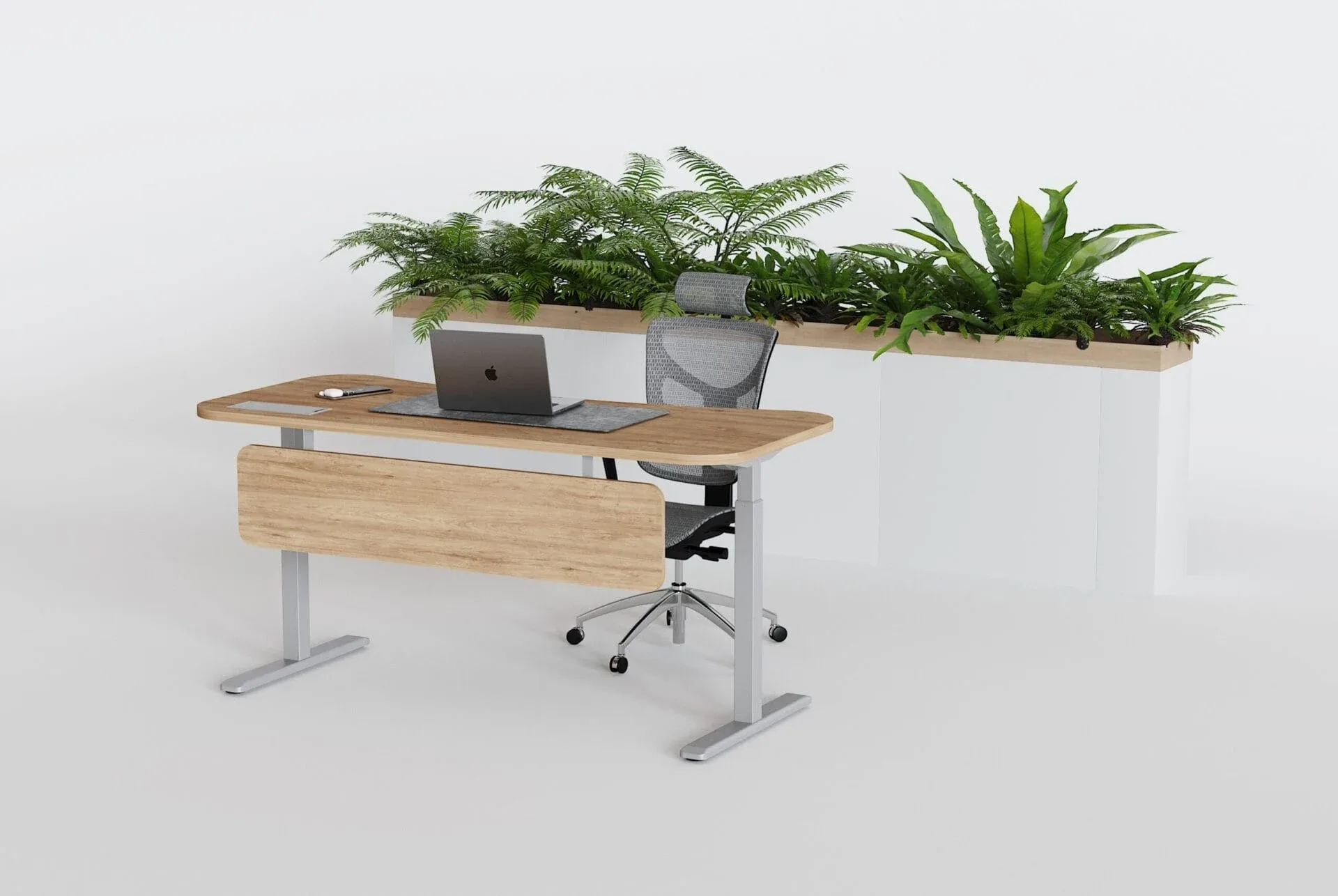
When a company grows, one of the first operational challenges it faces is how to physically organize its teams without sacrificing order, communication, or efficiency. Isolated individual desks, designed for small structures, stop working when you need to accommodate entire sales, customer service, development, operations, or call center areas.
That's where modular desks for large teams become the most logical solution: a furniture system designed to scale, reconfigure, and adapt to an organization's real growth, without having to redesign the space every time the number of employees changes.
In this article, we review what modular desks are, why they are the best option for large teams, what configurations exist, how to choose the right system, and what mistakes to avoid when planning a collective workstation.
What Are Modular Desks?
Modular desks are furniture systems made up of individual units — workstations — designed to connect to one another, forming larger configurations: rows, clusters, benches, or work islands. Unlike a traditional desk conceived as a single piece, the module is part of a coordinated system that shares structure, wiring, dividing panels, and, in many cases, finishes.
This modular logic allows the same product family to be used for a single workstation as well as for an area of 40, 80, or 200 employees, maintaining visual and functional consistency throughout the project.
Why Choose Modular Desks for Large Teams?
1. Real Scalability
The main problem with furnishing an office with uncoordinated individual desks is that, as the team grows, there's no orderly way to add new positions. Modular systems are designed exactly for that: adding workstations without breaking the logic of the space or creating visual inconsistencies.
2. Optimizing Available Space
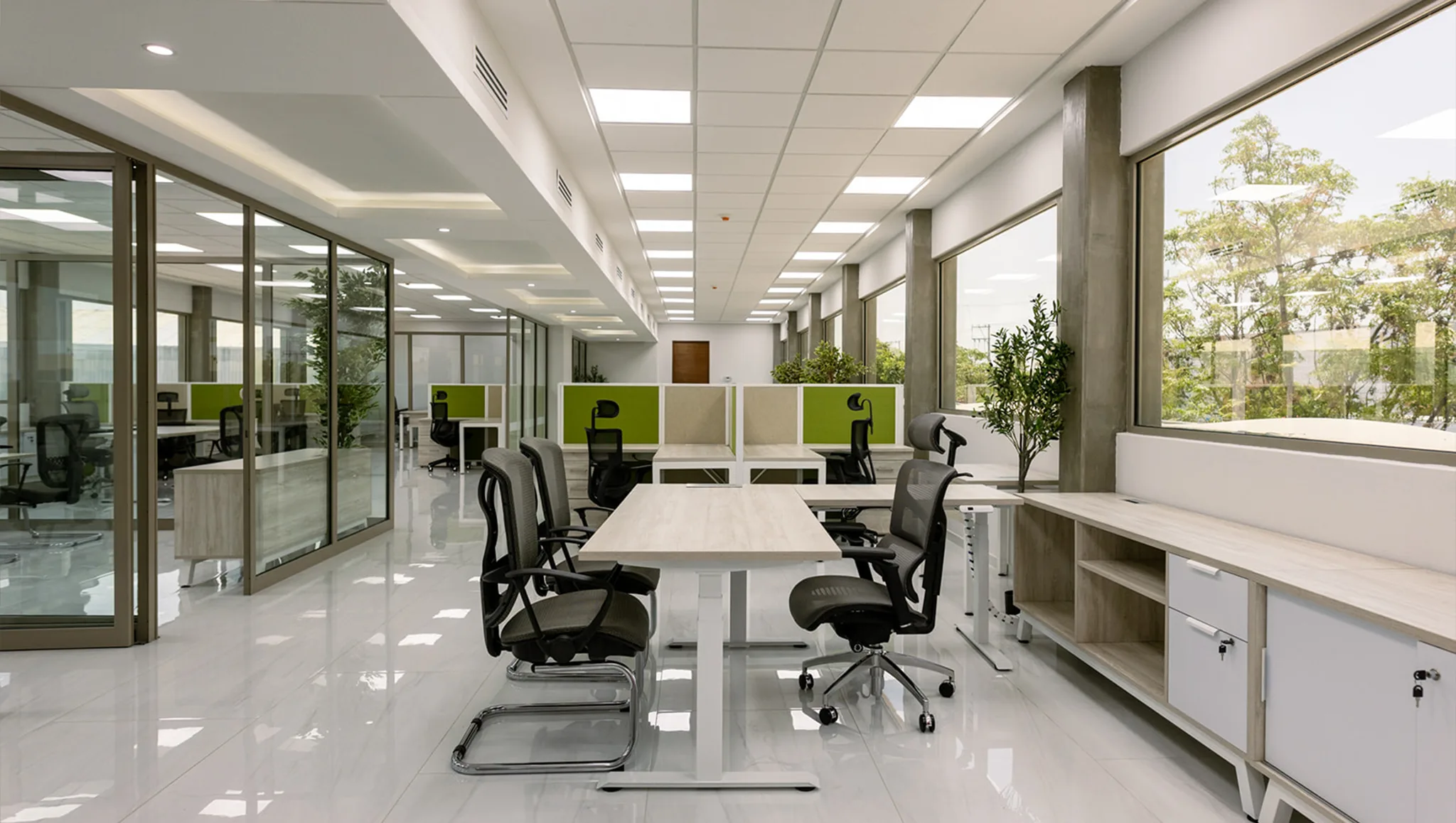
Modular configurations — bench, face-to-face stations, clusters — make better use of square footage than a layout of loose, individual desks. This is especially relevant in corporate offices, call centers, or coworking spaces, where the cost per square meter makes every workstation count.
3. Efficient Cable Management
One of the biggest headaches in areas with many workstations is managing electrical and data cabling. Modular systems usually integrate cable trays, grommets, and structures designed to hide and organize this wiring uniformly throughout the area, avoiding the visual chaos typical of offices with improvised connections.
4. Aesthetic Consistency Across the Entire Floor
When a large area is furnished with modular pieces from the same family, a unified image is achieved: the same finishes, the same height, the same panel logic. This reinforces an orderly corporate image, something especially valued by directors, HR, and facilities managers when presenting the space to clients or candidates.
5. Flexibility for Reorganizations
Teams change: areas merge, new departments are created, spaces are redistributed. Modular systems make these reconfigurations easier because the units can be disassembled, moved, and reassembled in a new layout without having to replace the entire furniture set.
6. Better Long-Term Cost-Benefit Ratio
Although the initial investment in a modular system can be comparable to that of individual desks, the savings show up over the medium term: less need to buy additional, inconsistent furniture, less wasted space, and a longer service life for the entire system.
Most Commonly Used Configurations for Large Teams
The choice of configuration depends on the type of work, the level of collaboration required, and the number of people per area. The most common are:
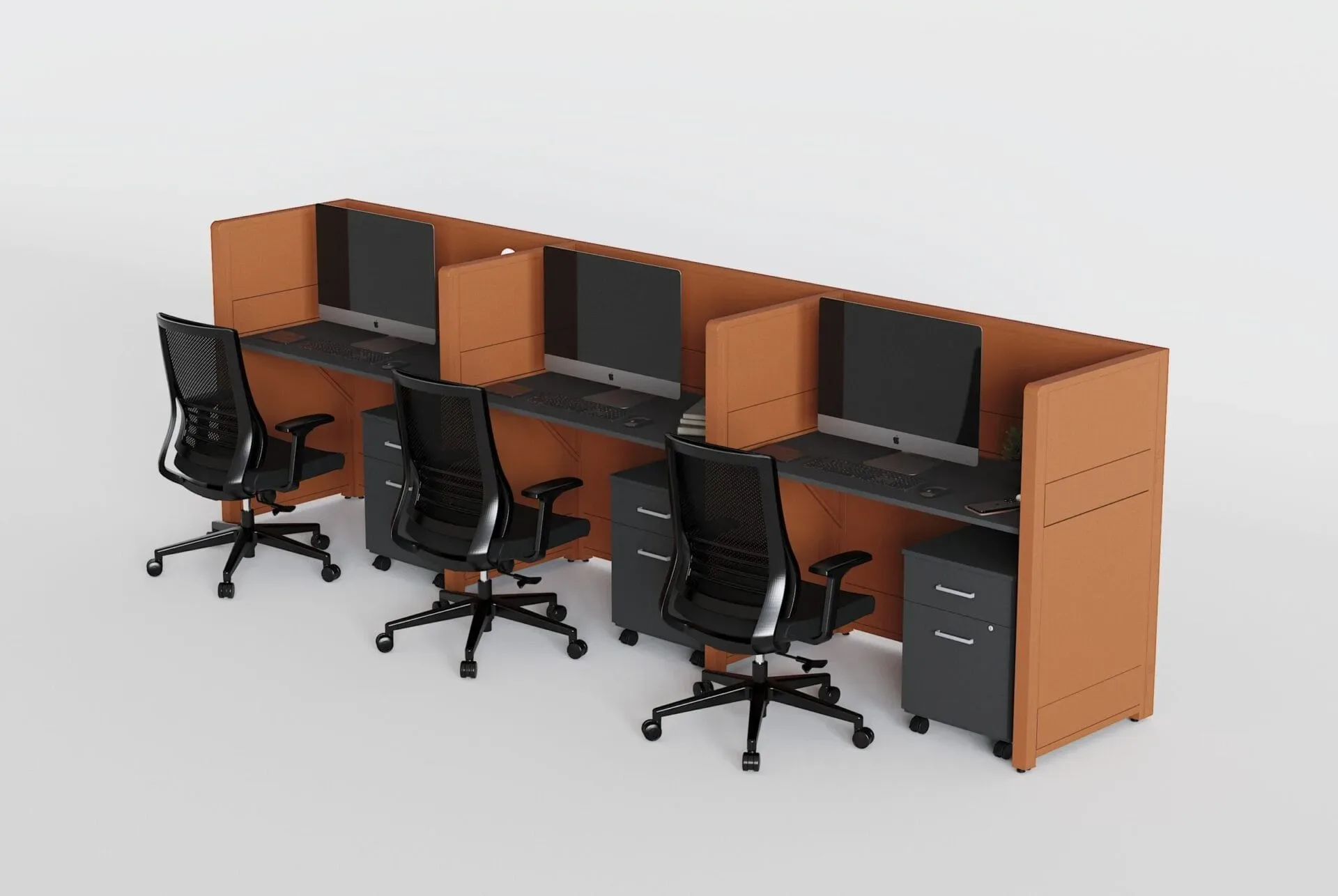
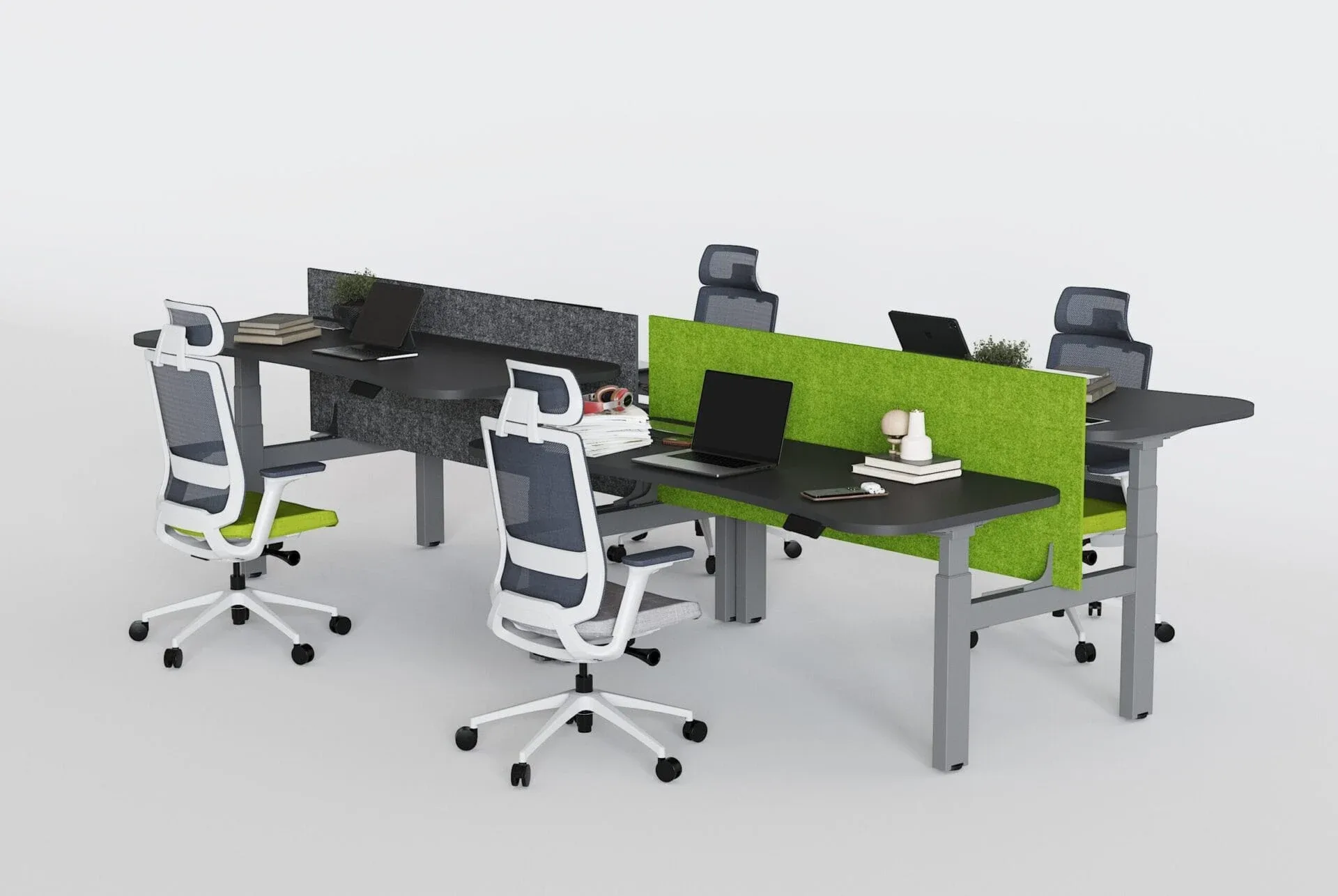
- Bench-style stations: several workstations share the same base structure, ideal for teams that require closeness and constant collaboration, such as development, sales, or customer service.
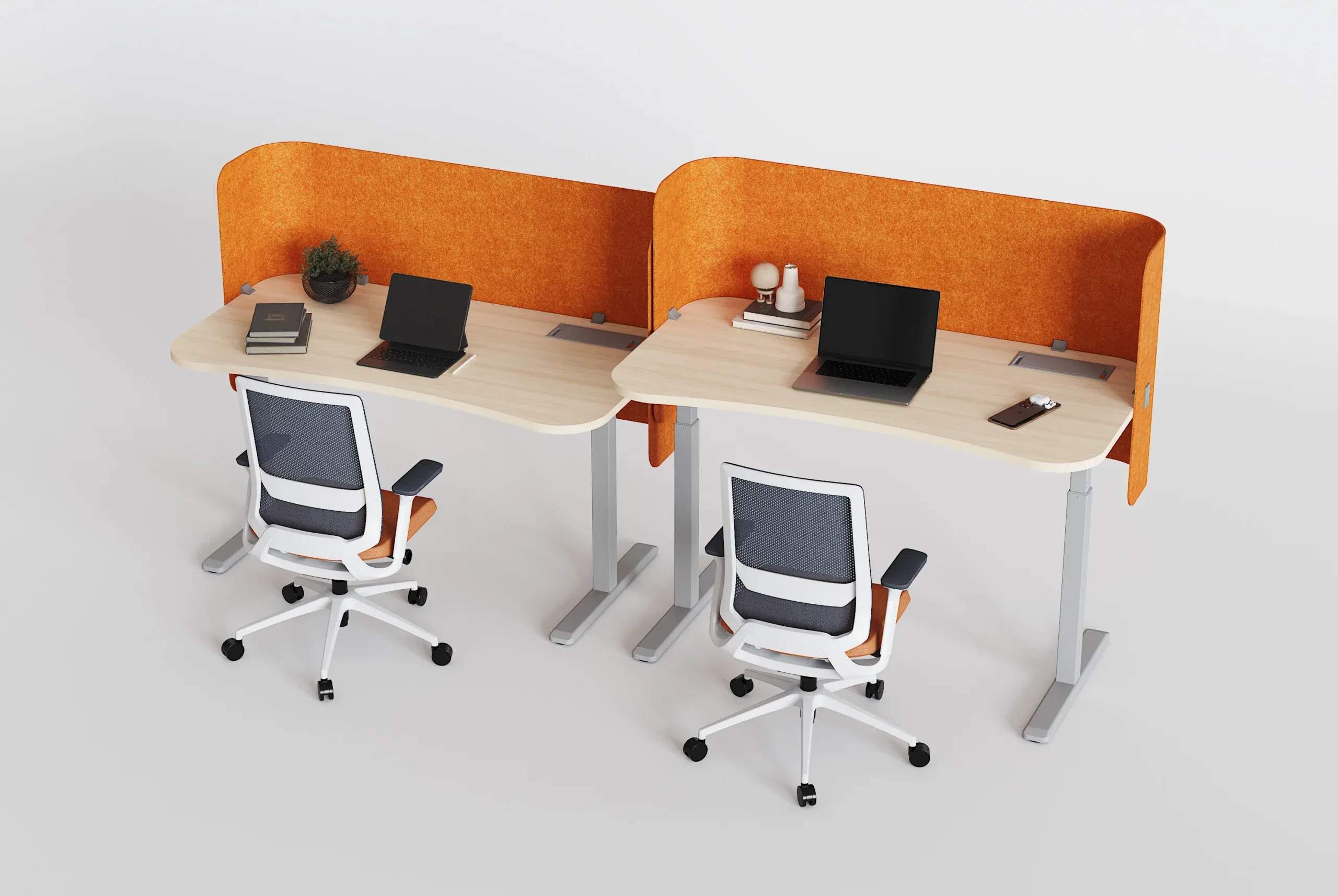
- Face-to-face stations: two or more employees share the same module facing each other, separated by dividing panels that provide visual privacy without fully isolating the team.
- Open stations: with no panels or low panels, they favor constant communication; they work well for creative teams or those requiring close coordination.
- Closed stations: feature taller panels that provide greater acoustic and visual privacy, recommended for areas that require concentration, such as software development or data analysis.
- Clusters or islands: group 4 to 8 positions into island-style configurations, optimizing space in large open floor plans, common in call centers and corporate offices.
You can learn more about these and other solutions in our workstations section.
Key Elements to Consider When Specifying Modular Desks
Acoustic Panels
In areas with many workstations, ambient noise can seriously affect the team's concentration and well-being. Incorporating panels with acoustic properties between stations helps mitigate this problem without sacrificing the feeling of open space. Check out our solutions for office acoustics.
Ergonomics
A large team also means a diversity of users with different physical needs. It's advisable for the modular system to allow for height adjustments, good monitor support, and surfaces with enough space for computer equipment, without visually cluttering the station.
Complementary Storage
Even when the work module is compact, it's common to integrate nearby 🔗 storage solutions — mobile pedestals, lockers, or shared cabinets — to maintain order without sacrificing desk space.
Proper Seating
A well-designed modular system is of little use if the chair doesn't match the ergonomics of the whole. It's important to select 🔗 office chairs that fit the height and proportions of the chosen stations, prioritizing comfort during long workdays.
Materials and Finishes
Laminates, metal structures, and wood-look finishes should be selected with durability in mind, since this is furniture subject to intensive, constant use. In addition, consistent finishes across all stations reinforce the orderly image of the space.
What Types of Companies Are They Ideal For?
Modular desks for large teams are especially recommended for:
- Call centers, where workstation density is high and every square meter needs to be maximized.
- Corporate offices with sales, customer service, or operations areas with dozens or hundreds of employees.
- Coworking spaces, where flexibility to reconfigure spaces is a constant requirement.
- Growing companies, which need a system capable of growing at the same pace as the team, without redesigning the space every time.
- Real estate developers and corporate projects that furnish entire floors and require visual consistency across large areas.
Common Mistakes When Choosing Modular Desks
- Not planning for future growth. Choosing a system that doesn't allow for adding modules in the medium term forces a space redesign sooner than necessary.
- Ignoring cable management. A modular system without well-thought-out cable trays and grommets ends up creating the same visual disorder it was meant to avoid.
- Prioritizing only the price per position. A cheaper but less durable system can lead to higher replacement costs in the medium term.
- Not considering acoustics. In large areas, skipping acoustic solutions can directly affect the team's productivity.
- Lack of layout guidance. Distributing stations without a prior analysis of the flow of people and the area's needs can create poorly functional spaces, even with good furniture.
Conclusion
Modular desks for large teams are not just a design trend: they are a practical response to the real needs of companies that are growing, reorganizing, and looking to optimize every square meter of their office. Choosing the right system means considering scalability, cabling, acoustics, ergonomics, and aesthetic consistency, always with guidance from specialists who understand the project as a whole, not as loose pieces.
Are you about to furnish or remodel your team's space? Request a proposal from our team of specialists and discover the ideal modular configuration for your office.